
Dental Implants Pearland
As Close to Mother
Nature as Possible
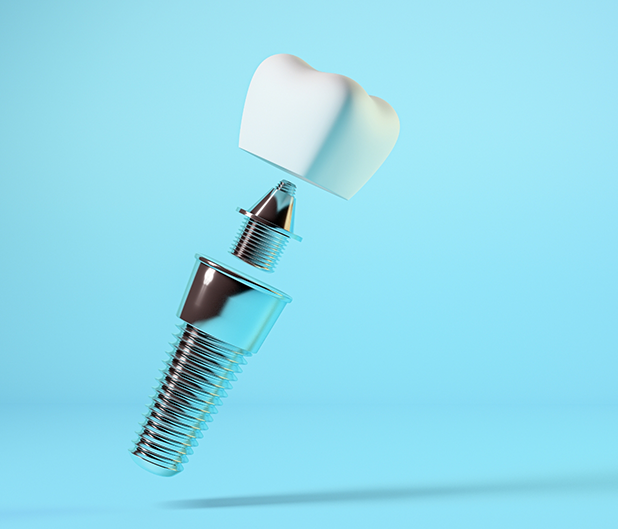
Dental implants are considered the gold standard for tooth replacement because the results look and feel natural, allowing you to enjoy a wide range of day-to-day, long-term, and health benefits. By mimicking the structure of your natural teeth, dental implants in Pearland are able to offer a confidence-boosting, unwavering answer to tooth loss so you can smile with pride once again. To learn whether you’re a good candidate for this procedure, we invite you to schedule a consultation with Dr. Thomas today.
Why Choose Elora Dental Studio for Dental Implants?
- Partnered with Local Implant Placement Experts
- Additional Financing Offered & Insurance Maximized
- Practice is Locally-Owned & Operated by Dr. Thomas
What Are Dental Implants?
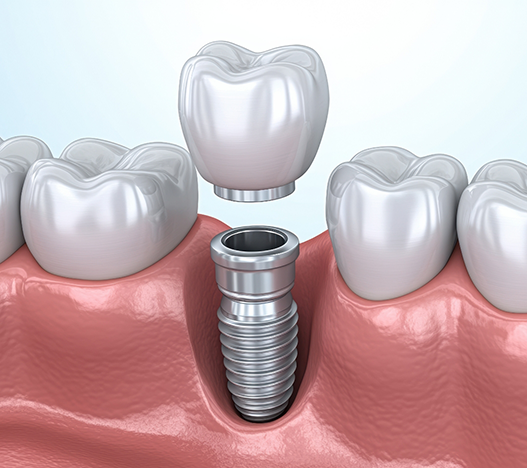
Dental implants are small, screw-like titanium posts that are surgically placed below the gumline to restore the roots of your missing teeth. Whether you’re missing one, several, or all of your teeth, dental implants are able to rebuild their entire structure from the ground up, providing unmatched strength and stability. After the implants are placed, they naturally begin a process called osseointegration, where they fuse with the bone. This allows them to act as an unwavering foundation for any type of restoration to be attached to.
The 4-Step Dental Implant Process
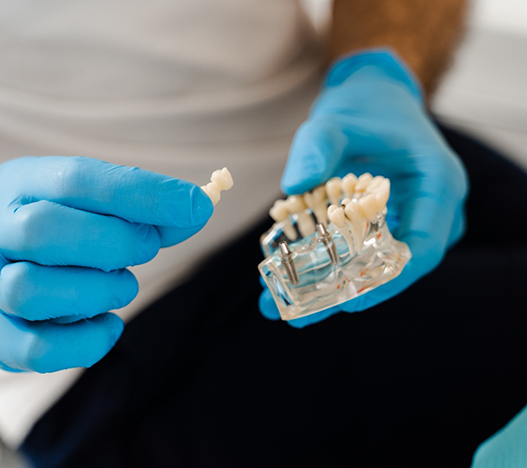
While similar to dentures and dental bridges, dental implants in Pearland require a longer, more complex treatment process. Patients must often wait four to six months to get them. That said, you needn’t worry; these special posts are worth all their time and effort! Since our office partners with local implant experts, your new teeth will benefit from immense expertise and skill. The entire implant process of consultation, surgery, osseointegration, and placement remains highly safe and effective!
Initial Dental Implant Consultation
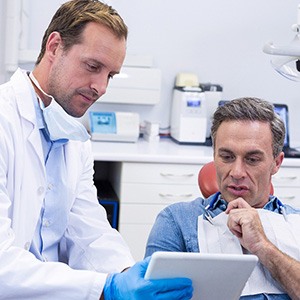
At the start of treatment, you’ll have a consultation with Dr. Thomas. She’ll meet you to confirm your specific treatment goals, your current oral health, and other relevant factors. Based on your feedback from this discussion, we’ll confirm whether dental implants suit you. Our team will also ensure they draft an appropriate treatment plan.
There’s no reason to worry if you don’t (initially) qualify for implants. Through preliminary services like tooth extractions or gum disease therapy, you can become a good candidate later. Appropriate dental work would strengthen your mouth (and jaw) enough to support implant posts.
Dental Implant Surgery
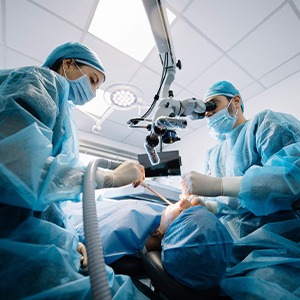
Should we approve, the consultation is followed by dental implant surgery. Local implant experts (i.e., oral surgeons) handle this treatment phase, which takes place outside our office. They’ll ensure your new restorations benefit from advanced dental skill and expertise.
In general, any given implant surgery involves the following:
- Anesthesia – The surgeons will numb your mouth with anesthesia before surgery. By doing so, they make sure the treatment process doesn’t hurt; you’ll have ache-free care.
- Incision(s) – As the anesthesia “kicks in,” the specialists will make an incision in your gums. This cut makes room in your mouth for the actual implant post.
- Implant Placement – Using advanced tools and methods, the surgeons will place your implant precisely and carefully. That means your new tooth will look (and feel) great!
- Gum Closure – The surgical specialists will close your gum incision after placing the implant. From there, they’ll set a cap over the post.
Dental Implant Osseointegration & Abutment
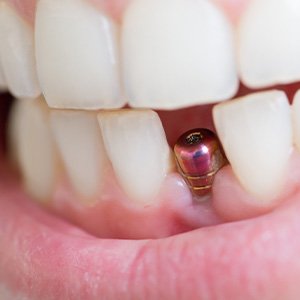
Soon after surgery, the placed implant will start fusing with your jawbone. This process – also called “osseointegration” – takes roughly 4-6 months and further stabilizes the post. In other words, it ensures your new “tooth” becomes a permanent part of your mouth.
You’ll undergo a follow-up surgery once your implant fuses. At that time, specialists will place an abutment (i.e., a small metal connector) over your base post. A dental lab will craft your final restoration while you recover from this latter placement.
Delivery of Dental Implant Restoration(s)
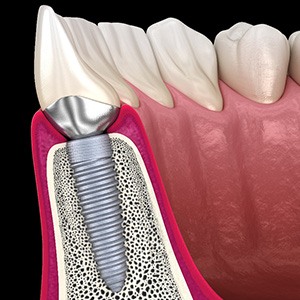
You’ll receive your final restoration at the end of the implant process. However, note that this device can vary; what you get will depend on how many teeth you lost. The restoration could be a dental crown, an implant bridge, or even an implant denture.
Whatever its type, fitting the final restoration doesn’t take long. We only need to apply some dental cement to your abutment, set the device, and make final adjustments. Afterward, you can head out to enjoy your full smile!
Benefits of Dental Implants
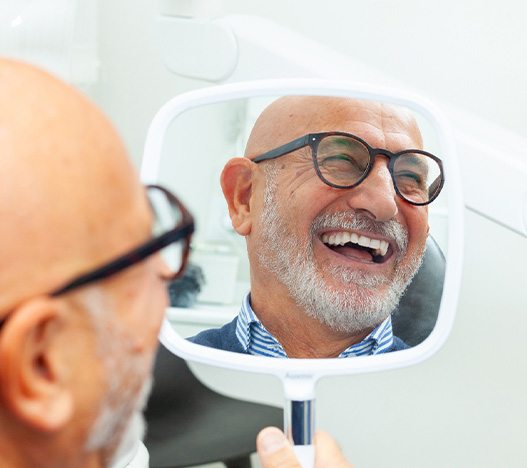
Many experts consider dental implants the ideal way to replace missing teeth because, unlike other restorations, such as dentures or dental bridges, they are surgically placed directly in your jaw. Then, they eventually fuse with the bone to become a more permanent part of your mouth.
This allows them to provide many unique advantages over the alternatives. Continue reading to learn more about the different benefits of choosing to rebuild your smile with dental implants!
Day-to-Day Benefits

The gaps in your grin left behind by missing teeth can make once-basic tasks, like eating and speaking, much more challenging. Your new teeth might help improve your daily quality of life by:
- Improving your chewing power. This is the only service that can return up to 80% or more of your original bite force, resulting in fewer dietary restrictions.
- Enhancing your enunciation. Many patients are able to overcome changes to their speech patterns caused by missing teeth, such as a lisp or slur, so you can communicate more effectively.
- Boosting your confidence. Your restoration is made from lifelike, customizable materials for seamless results that improve your self-esteem.
- Easier dental hygiene. These can be brushed and flossed in your mouth like natural teeth and don’t usually require special accessories, such as soaking solutions, pastes, or brushes, to keep them clean.
Health Benefits

The unique placement of these restorations also allows them to provide unique advantages that support your oral and overall well-being in the following ways:
- Preserve your jawbone. The implant post in your mouth functions like a root, stimulating your jaw when you bite down and helping keep it active and healthy, which prevents additional tooth loss and changes to your facial structure.
- Prevent dental drifting. Your prosthetics help ensure any remaining teeth stay in their rightful places rather than shift out of alignment to fill the empty spaces, helping avoid damage or decay.
- Enjoy a wholesome diet. These are unlikely to become destabilized or dislodged, so you can enjoy a wider variety of healthy foods to support your system.
Long-Term Benefits

There are also several long-term advantages of restoring your grin with dental implants, including:
- Resilient materials. The durable materials can withstand the daily pressure of biting and chewing and resist chipping, cracking, and staining.
- Long-lasting solution. This treatment can potentially last 20+ years with proper care.
- Save money over time. Implants are unlikely to become destabilized or dislodged, reducing the need for costly repairs or replacements. Plus, there’s no need to regularly invest in additional accessories, such as special cleaners or adhesives, to reduce out-of-pocket costs over the years.